How to Set Up and Use Workflows
A workflow sorts your waiver forms into a set of choices. Signers tap through a few buttons, such as a division and then a team, and end up at the form or forms they need to sign. Workflows also handle cases where people have to sign more than one form in a row.
What a Workflow Is
A workflow is a tree of steps. Each step is a button the signer picks. Steps can have steps under them, so you can build any layout you need. For a sports tournament, you might have divisions, then boys and girls, then teams. The path ends in the waiver form or forms they sign, either one form they choose or several, one after another.
You can use a workflow on your main signing page (general admission), with events, or both.
Create a Workflow
- Open the workflows list. Go to Waivers › Workflows (classic menu: Workflows) and click Add workflow.
- Name it and pick where it's used. Enter a Workflow name, choose a Status, and choose a Mode: General Admission, Events or Both. The workflow name is the text on the first button. To set a different button text or page title for the first step, click Advanced settings.
- Click Add workflow. The editor opens.
- Fill in the Set up panel. A new workflow shows a Set up "<name>" panel with three questions: which waiver forms signers sign, whether they sign all of them one after another or just one they choose (when you pick two or more), and whether signers choose something first. Type one choice per line and each line becomes a step. Click Set up workflow, or Skip for now to build it by hand.
The Workflows List
The list shows each workflow's name, where it's used, its status (On, Off, Ended, or "On until" a date), and how many steps, forms and upcoming events it has. Each row has View waivers, Turn off or Turn on, and a delete button. Click a workflow's name to edit it.
The Workflow Editor
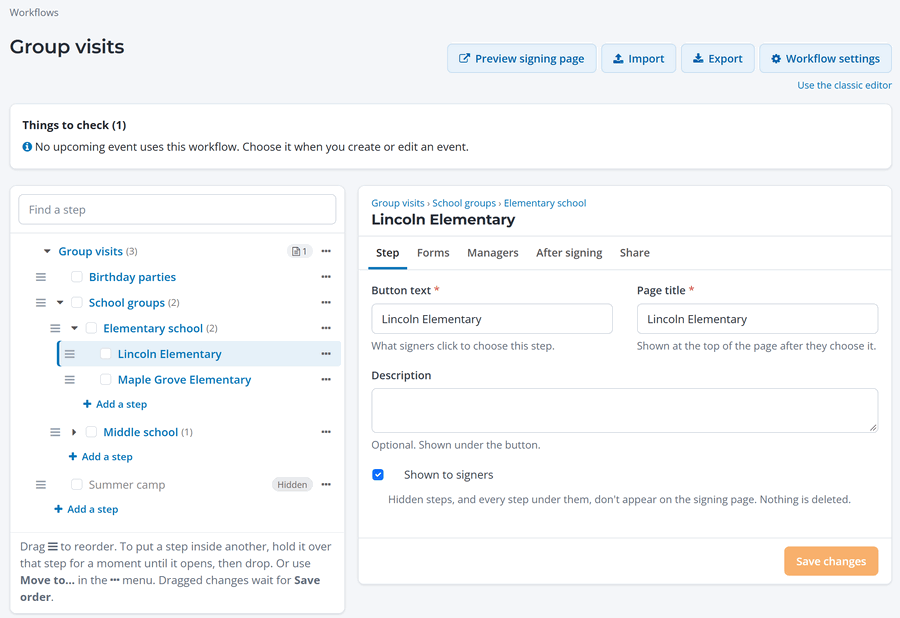
The editor has the list of steps on the left and the selected step on the right. Along the top are Preview signing page, Import, Export (a CSV file of your steps) and Workflow settings.
Things to Check
If something in the workflow needs attention, a Things to check panel lists it with a link to fix it. It flags a workflow with no forms, a step with no forms (a dead end), a hidden step with steps under it, a step where every form is optional, a form that was deleted, a workflow that is off or has ended, and a workflow that no upcoming event uses.
The Step List
- Find a step searches the whole workflow.
- Badges show when a step is Hidden, has No forms, how many forms and managers it has, and how many people have signed under it.
- + Add a step is at the end of each open level.
- Drag a step by its handle to reorder it. To put a step inside another step, hold it over that step until it opens. Drag changes wait until you click Save order (or Discard).
- A level with more than 25 steps gets a filter box, Sort A–Z and Show all.
- Check the boxes next to steps to work on several at once: Move to…, Hide, Show, Invite managers, Delete or Clear.
Each step also has a ⋯ menu. From it you can add a step under it, add several from a list, import a spreadsheet there, move it, sort the steps under it A–Z, hide it from signers or show it again, make a copy, invite managers, copy its signing link, or view its signed waivers.
Deleting a step Deleting a step also deletes the steps under it. You get an Undo button right after.
Step Tab
- Button text: the text on the button signers tap.
- Page title: the title at the top of the page when they open this step.
- Description: shown under the button.
- Shown to signers: uncheck it to hide the step. Hiding a step also hides every step under it. (The first step doesn't have this box.)
Click Save changes at the bottom of any tab to save.
Forms Tab
The top of the tab sums up what signers who choose this step will sign, and whether those forms are set on this step or come from a step above it.
Under Forms added to this step, click Add forms, search for and check the forms you want, and choose Required or Optional (they can skip it). Drag forms to change their order. When signers sign all the forms one after another, each form has a Required/Optional button. Click Remove to take a form off the step.
Open How forms are offered for two more settings:
- When do signers sign the forms on this step? At the end of every path under this step sends signers through the steps below first and shows the forms at the end. This works well when you import a long list of teams that all sign the same forms. Right here, as buttons next to the step buttons offers the forms on this step itself, for example a form everyone can sign here while the steps below have their own forms.
- When there's more than one form, how many do signers sign? Choose one shows a button for each form. All of them, one after another takes signers through each form in turn.
Both settings can also be Same as the step above, which uses whatever the step above it uses.
When a step has steps under it, Choosing a step on the form appears. Turn on Let signers pick one of the steps under this one for each person to add a dropdown to the form. This is common for tournaments: a parent reaches the form through one team, but can pick a different team for each child on the same form. Use Label for the dropdown to change its label from "Select" to something like "Team".
Managers Tab
Like event managers, you can invite managers to any step. Click Invite managers, enter their email addresses and an optional message, and click Send invitations. Each person gets an invitation to log in. New users get a password made for them.
Managers see who signed under their step and every step under it, but not the waivers themselves. They also get a signing link for their part of the workflow, so they can share it with their group. The tab lists the step's managers (with Resend invite and Remove) and, under Also see this step, the managers of steps above it.
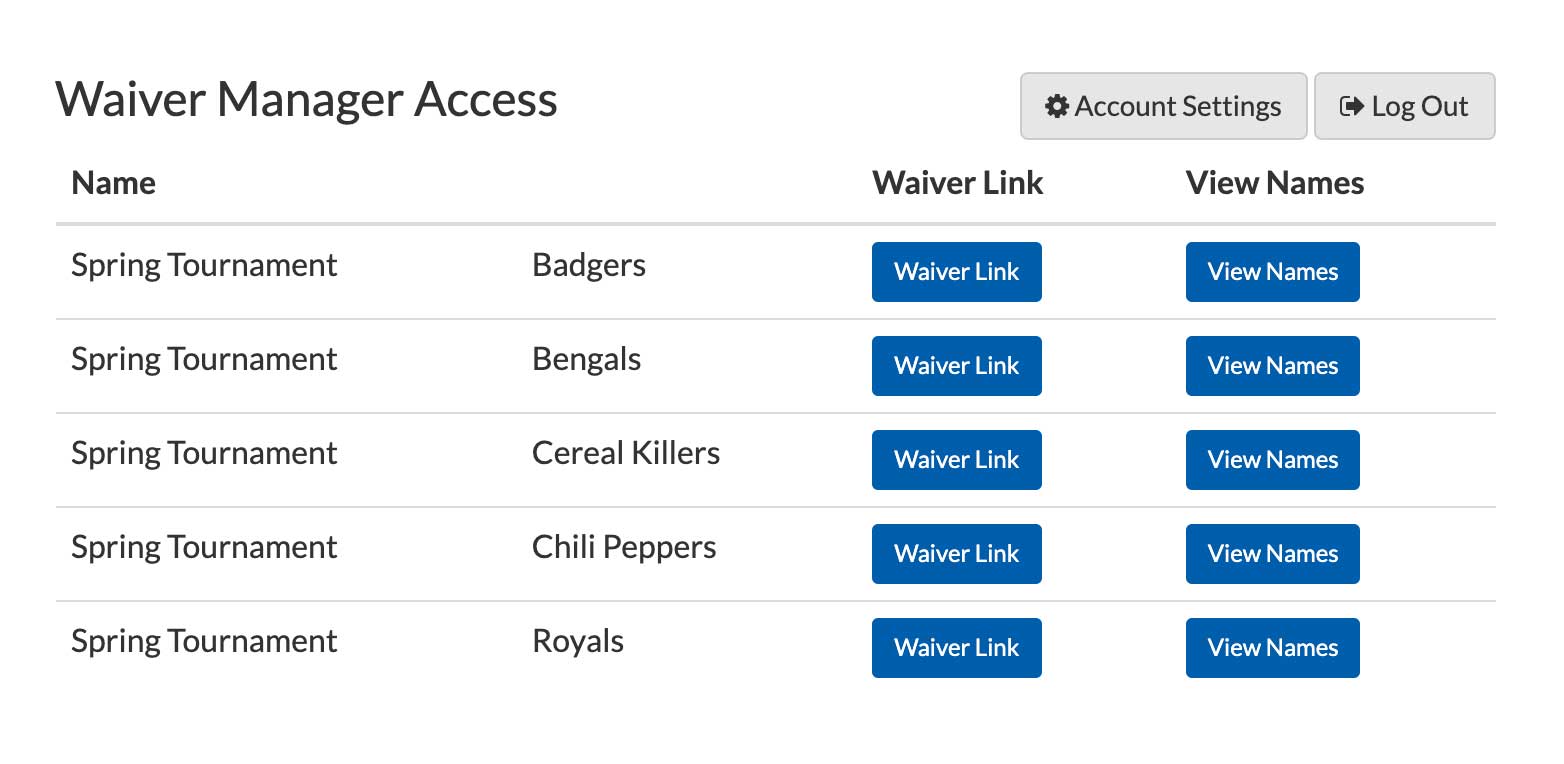
To choose which columns managers see, open the first step's Workflow tab and click Choose the columns managers see.
After Signing Tab
- Confirmation message: the default message or one of your confirmation pages. Set those up under Waivers › Confirmation Pages (classic menu: Customize › Confirmation Templates).
- Confirmation email: your account's default email, no email, or one of your templates from Messages › Email Templates (classic menu: Customize › Email Templates).
- Sending the email: use your account's email setting, send it automatically, offer a button to send it, or don't send it.
Each one can be Same as the step above. On the first step, that means your account's settings.
Share Tab
The Signing link goes straight to this step. Click Copy to copy it. For a workflow used with events, pick the event in the For event dropdown first. The tab also shows how many people have signed under the step, with View signed waivers, and lets you preview the step or open it in a new tab.
Workflow Tab
The first step has a Workflow tab for the whole workflow:
- Workflow name: for your own use. Signers don't see it.
- Where it's used: General admission, Events or Both.
- Status: On or Off. When it's off, only signed-in admins and moderators can open it.
- Stop accepting signatures after: an optional end date.
- Choose the columns managers see and Delete this workflow.
Import Steps from a Spreadsheet or a List
For a workflow with a lot of steps, such as every team in a tournament, use Import at the top of the editor, or Import a spreadsheet here… or Add several from a list… in a step's ⋯ menu.
- Choose where the steps go. Add to shows the step they'll go under. Click Change to pick another one.
- Add your steps. Choose Spreadsheet to upload an .xlsx, .xls or .csv file (up to 5,000 rows), or Paste a list with one step per line. In a pasted list, start a line with a dash to put it one level down, and add
| email after a name to invite a manager.
- Match your columns. Check The first row has column names if it does. For each column, choose what to use it as: Group (level 1, 2 or 3), Step name, Page title, Description, Manager email(s), or Don't use. Group columns build several levels in one go, for example division, then team.
- Review and import. Choose whether managers in the list are added to or replace a step's current managers, whether to send one email per person, and whether to hide steps that aren't in the list. Check the summary of changes, then click Make these changes.
Steps are matched by name, so you can import an updated list again later. Import doesn't assign forms. Add those on the Forms tab, usually on a step near the top with At the end of every path under this step.
Using Workflows with Events
Set the workflow's mode to Events or Both. Then go to Events and click Add event. Next to the waiver forms is a Workflows list. Check one or more workflows, and signers for that event get those choices.
Reviewing Signed Waivers in a Workflow
On the workflows list, click View waivers next to a workflow. You move through the steps much like signers do, and each step lists its signed waivers. If someone signed under the wrong step, check their row and click Move. Remove moves people to Removed participants, where you can bring them back with Restore selected. You can also add participants, and change the columns with View settings.
Dashboard Columns for Workflows and Multiple Forms
When someone signs several forms, the signed waivers list groups their name once instead of repeating it for each form. To see which forms each person completed, go to Waivers › Signed Waivers (classic menu: Dashboard), click Customize layout, and click Choose Columns in a section. These columns help:
- Form Complete: [form name]: one for each of your forms. Use it to see at a glance whether an optional form was signed.
- Workflow Path: the steps each person went through.
- Waivers Completed In Series: how many forms were signed in the series.
What Signers See
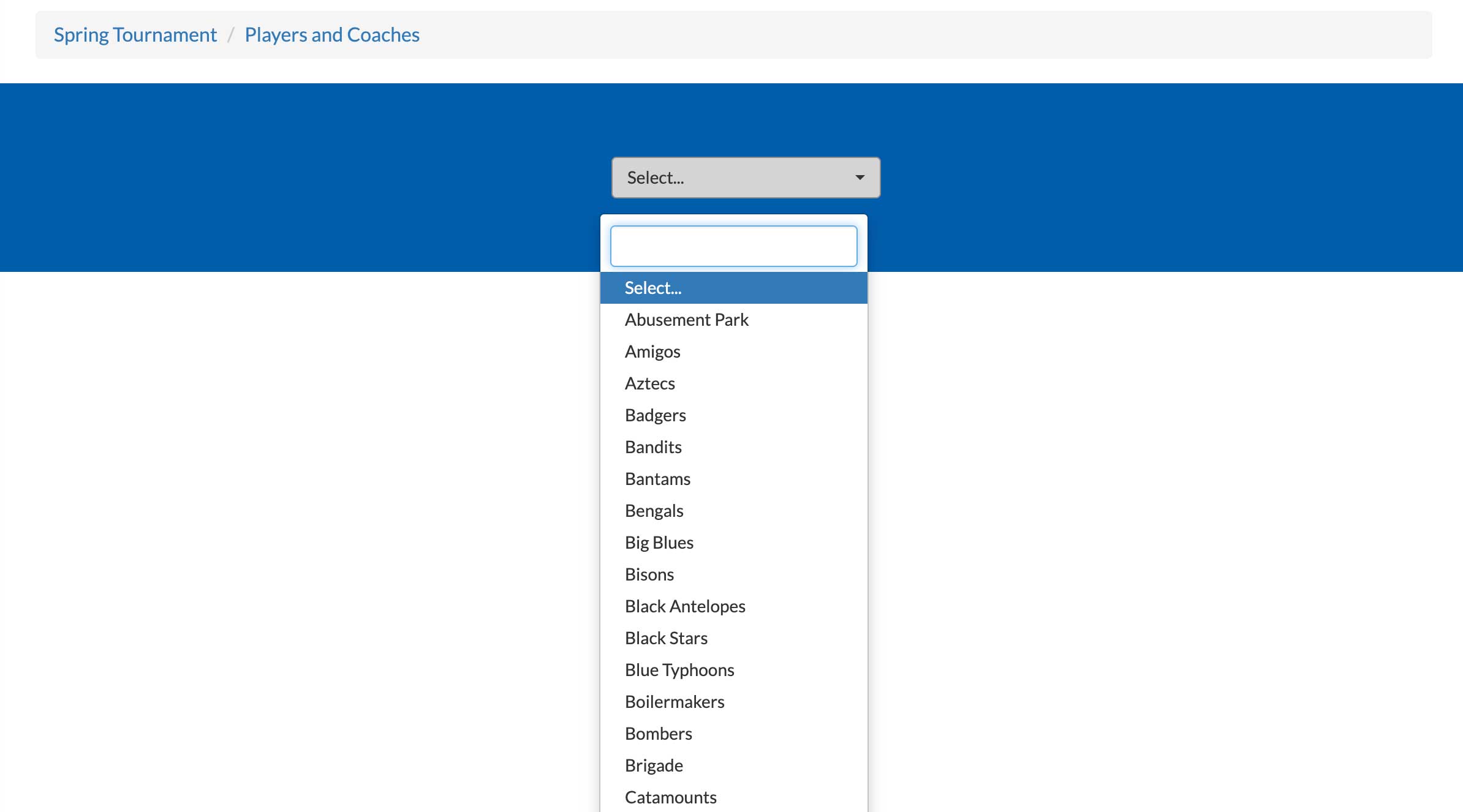
Signers see a large button for each step. If a step has more than 10 choices, they get a searchable list instead.
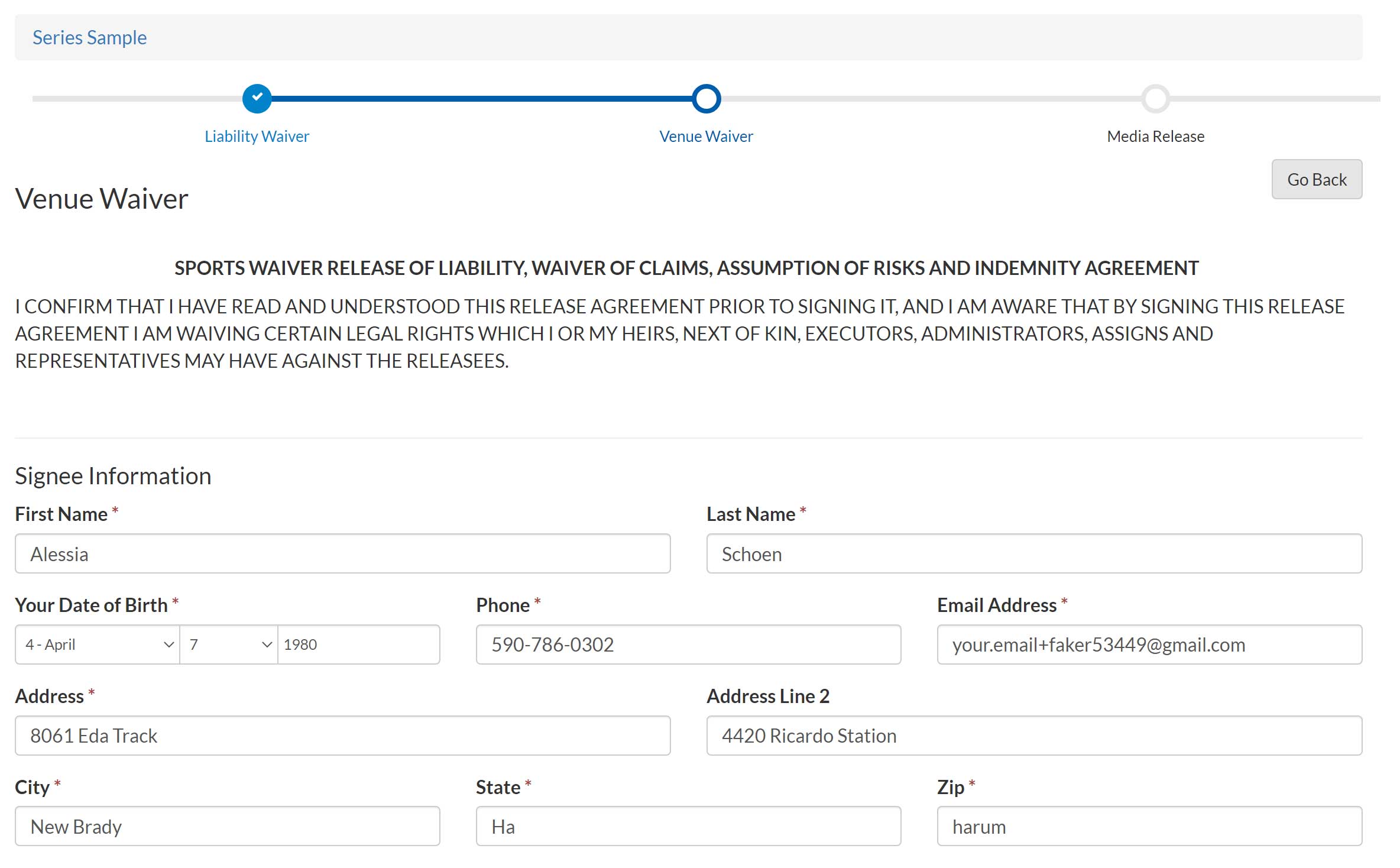
When they sign several forms in a row, a progress bar at the top shows where they are. Later forms fill in answers they already gave, and optional forms have a skip button.
Classic editor The editor has a Use the classic editor link if you need the older editor. It has a Use the new editor link to come back.
Related Articles